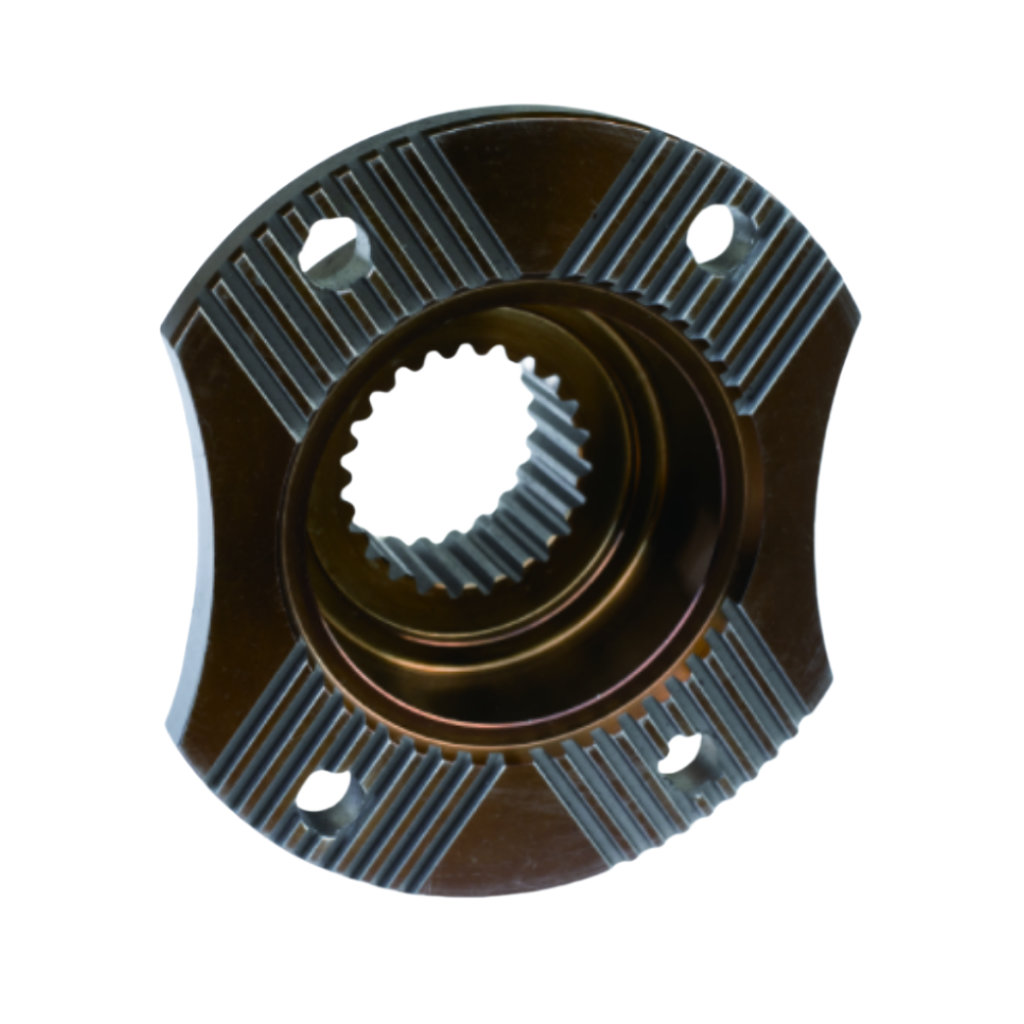
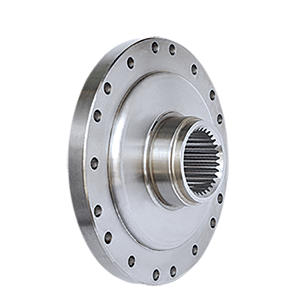
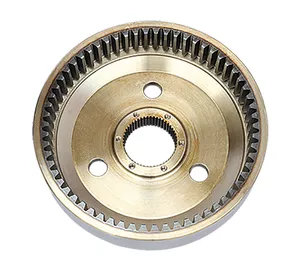
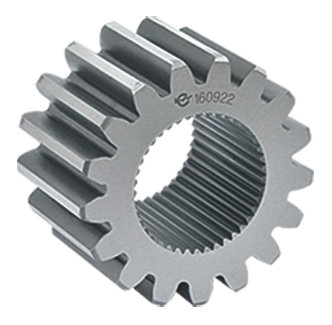
In a wheel loader's drivetrain, the unsung hero is often the internal splined gear that locks the input shaft to the planetary reduction system. When this component wears, slips, or cracks, you get power loss, abnormal noise, and eventually a stripped spline that sidelines the machine. The 50-Spline Gear for XGMA Lonking Model 50 Loaders is purpose-built to prevent exactly that. Forged from alloy steel, CNC-broached to precise spline geometry, and quenched & tempered for a hardened case with a tough core, it is engineered as a direct interchange replacement that restores full torque transfer reliability. But what specific manufacturing attributes separate a gear that "fits" from one that delivers years of trouble-free service in quarry and construction conditions?
The Function of the 50-Spline Internal Gear in the Final Drive
The 50-spline gear acts as the stationary reaction member (or input coupler depending on design) in the planetary gear set of XGMA and Lonking 50-series loaders. Its roles are:
Torque Coupling: Engages with the splined shaft to transmit engine/transmission power into the planet carrier or sun gear train.
Rotational Reference: The spline profile provides a precise angular reference, ensuring concentricity of the rotating assembly.
Shock Absorption Medium: Together with the QT-treated core, the spline teeth absorb torsional spikes from sudden bucket loads or direction reversals.
If the spline is loosely cut, improperly heat-treated, or made from low-grade material, micro-movement between shaft and gear accelerates wear—leading to the classic "splinestripped" failure mode.
Why Forging + QT Heat Treatment Is Non-Negotiable
A broached spline is only as strong as the metal it's cut from. This gear is:
1. Forged Alloy Steel – Grain Flow Matters
Forging under adequate press tonnage aligns the steel's grain structure along the part contour, including the spline root radii. This aligned grain flow:
Increases fatigue strength vs. cast blanks
Eliminates internal porosity that seeds fatigue cracks
Provides uniform response to cyclic loading
2. Quenching & Tempering (QT)
Quench → Martensitic Surface (HRC 58–62): Resists abrasive wear and spline flank deformation under high contact pressure.
Temper → Tough Core (HRC 35–42): Absorbs shock loads without brittle fracture—critical when a loader bites into packed rock or encounters an obstruction.
Skipping tempering leaves the gear internally stressed and prone to sudden tooth/shear root failure even if the surface looks hard.
CNC Broaching: Why Spline Accuracy Directly Affects Uptime
Broaching is the preferred method for internal spline production because it generates the entire tooth form in a single pass, yielding:
Consistent Tooth Thickness & Lead: Ensures 100% flank contact with the mating shaft splines → even load distribution → less localized wear.
Tight Concentricity: The gear bore and spline axis are held coaxial within tight tolerances, preventing runout that would vibrate bearings and adjacent gears.
Smooth Flank Finish: Reduces friction-initiated micropitting during early run-in.
Cheap alternatives (milled or hobbed internal splines) often have inconsistent pitch and profile deviations that cause premature fretting corrosion at the shaft-gear interface.
In-House Quality Verification You Should Expect
Reputable suppliers (like Jinjiang Anhai Liancheng Machinery Co., Ltd.) perform 100% inspection:
Spline Gauge Check: Go/No-Go spline plug gauges verify tooth spacing and form.
Hardness Test: Case & core hardness confirmed per QT spec.
Runout & ID Measurement: Ensures the bore and spline are concentric to drawing tolerance.
Crack Detection: Magnetic Particle Inspection (MPI) to catch surface discontinuities before shipment.
This QC rigor differentiates a true OEM-spec replacement from a generic "looks-like" part.
Signs Your 50-Spline Gear May Need Replacement
Noticeable rotational play / "slop" between input shaft and gear when the driveline is disassembled
Fine metallic particles in final drive oil with spline wear patterns visible upon teardown
Difficulty re-engaging drive after a shaft seal replacement due to elongated spline roots
Abnormal whining that correlates with engine RPM but changes with loader direction
Prompt replacement prevents secondary damage to the sun gear, planet carrier, and bearings.
Sourcing Tips for B2B Buyers & Parts Distributors
When procuring a 50-Spline Input Gear for XGMA Lonking Model 50 Loaders:
✅ Confirm spline count (50T), pressure angle, module, major/minor diameters match OEM drawings.
✅ Request material cert + heat treatment report (quench temp, temper temp, hardness results).
✅ Verify 100% MPI & spline gauge inspection documentation.
✅ Prefer manufacturers with in-house forging, heat treat, and broaching—ensures traceability and batch consistency.
✅ Ask about custom marking (part number/lot code) and packaging suitable for export.
Conclusion: Precision Spline = Protected Drivetrain
The 50-Spline Gear for XGMA Lonking Model 50 Loaders is not a commodity spare—it's a precision-forged, QT-hardened, CNC-broached transmission component designed for the exact torque spectrum of a 5-ton class wheel loader. Specifying a gear with verified forging pedigree, correct QT heat treatment, and broached spline accuracy is the simplest way to prevent spline strip-out and extend the service interval of your loader's final drive. For fleet managers and aftermarket parts distributors, it's a small specification detail that pays back in significantly reduced downtime.