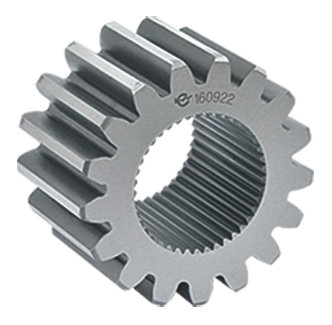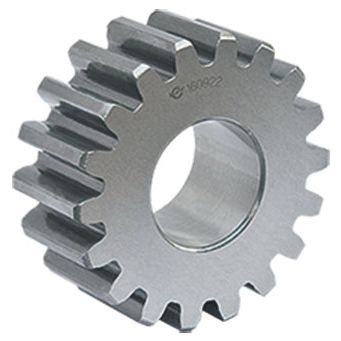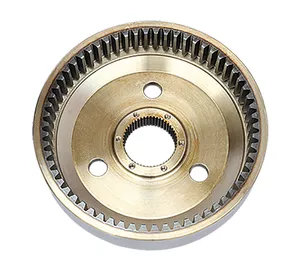
Gear systems are critical components in loaders and excavators, especially within planetary gearboxes and final drive assemblies. When a single gear tooth fails, it can lead to abnormal noise, reduced efficiency, or even complete machine shutdown. For equipment owners, maintenance teams, and parts buyers, understanding why gear tooth failure happens is the first step toward preventing costly downtime.
So, what actually causes gear teeth to fail in heavy equipment? Let’s break it down in a clear, practical way.
One of the most common reasons for gear tooth failure is overloading, especially in loaders and excavators working under harsh conditions.
Sudden impact loads—such as digging into compacted soil, rock, or debris—create stress concentrations at the tooth root. Over time, repeated shock loads can lead to micro-cracks that gradually expand. Eventually, the tooth may chip or break completely.
This kind of failure is more likely when operators push machines beyond their rated capacity, and honestly, it happens more often than people expect.
Transitioning from operation to material behavior, overload issues are closely related to gear design and manufacturing quality.
Heat treatment plays a huge role in determining gear durability. Processes like quenching and tempering (QT) are designed to create a hardened surface with a tough core—an ideal combination for resisting wear and impact.
However, if heat treatment parameters are poorly controlled, problems can arise:
Excessive hardness may cause brittleness
Insufficient hardness results in rapid wear
Uneven hardness can lead to stress imbalance across the tooth
In some cases, gears looks strong on the surface, but the internal structure is weak, which is a recipe for early failure.
Not all gears are created equal. Gear tooth failure can often be traced back to manufacturing defects, especially in low-quality cast or poorly forged gears.
Common issues include:
Internal porosity from low-pressure casting
Inconsistent grain flow
Insufficient forging tonnage during forming
Poor machining accuracy
For heavy equipment gears, forging under adequate press tonnage significantly improves grain structure alignment along the tooth profile. If press capacity is too low, the gear may never achieve the strength it was designed for—it just cant hold up long-term.
Lubrication problems are another major contributor to gear tooth damage. Inadequate lubrication increases friction and surface temperature, accelerating wear and fatigue.
Contaminants such as metal debris, dust, or water can enter the gearbox and act like abrasives. Over time, this causes:
Pitting on tooth surfaces
Scuffing and micro-welding
Accelerated fatigue cracks
And once lubrication film breaks down, failure tends to happen fast.
Even a high-quality gear can fail prematurely if installed incorrectly. Misalignment between mating gears causes uneven load distribution across the tooth surface.
Instead of sharing load evenly, stress concentrates on a small contact area, leading to localized wear or tooth root cracking. This is why proper assembly and alignment checks are essential during maintenance or part replacement.
To put it simply, a good gear still needs a good setup.
Gear teeth are subjected to millions of load cycles over their service life. Even when operating within design limits, fatigue failure can occur if material quality or surface finish is insufficient.
Fatigue cracks usually start at the tooth root and propagate slowly until sudden fracture occurs. This type of failure is common in machines that run continuously for long hours, especially in construction and mining environments.
To minimize gear tooth failure in loaders and excavators, buyers and users should focus on:
Choosing gears made from high-quality alloy steel
Ensuring proper forging and heat treatment processes
Maintaining clean and sufficient lubrication
Verifying correct installation and alignment
Selecting tooth counts and gear designs matched to application load
From a sourcing perspective, working with an experienced manufacturer that controls forging, machining, and heat treatment in-house can significantly reduce long-term risks.
After all, gears may look simple—but their performance depends on a lot more than meets the eye.