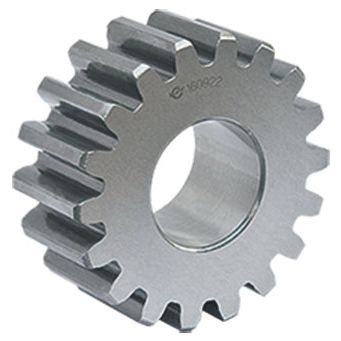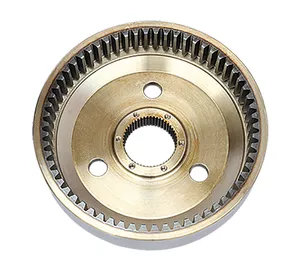
When buyers search for high-quality gears for excavators, loaders, or other heavy equipment, they often focus on material grade, heat treatment, or tooth accuracy. However, one critical factor is frequently overlooked: forging tonnage.
In simple terms, forging press capacity plays a key role in determining gear strength, durability, and long-term performance.
So why does forging tonnage matter so much, and how does it affect gear quality in real-world applications? Let’s break it down step by step.
Forging tonnage refers to the maximum force a forging press can apply during the forming process, usually measured in tons. In gear manufacturing, this force is used to shape heated steel into a dense, near-net gear blank before machining and heat treatment.
Higher tonnage means the press can apply greater pressure, allowing the metal to flow more completely into the die cavity. This results in better internal structure and more consistent mechanical properties throughout the gear.
And yes, this is where quality starts—not at the machining stage, but much earlier.
When steel is forged under sufficient pressure, its internal grain structure is refined and aligned along the shape of the gear. This process significantly improves strength and fatigue resistance.
If forging tonnage is too low:
Metal flow becomes incomplete
Internal voids or weak zones may remain
Grain structure is less compact
Final gear strength is reduced
On the other hand, properly forged gears show:
Higher impact resistance
Improved load-bearing capacity
Better resistance to cracking and tooth breakage
Simply put, insufficient forging pressure can make a gear look fine on the outside but weak inside, which is not good for heavy-duty equipment.
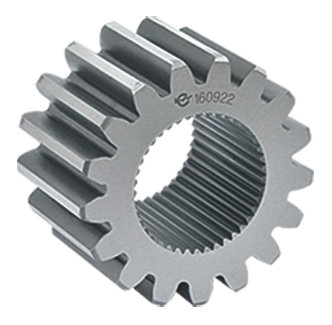
Larger gears or gears with higher tooth counts—such as 62-tooth gears used in loader final drives or planetary gearboxes—require significantly more forging force. This is because:
The cross-sectional area is larger
Material flow paths are longer
Uniform density is harder to achieve
For example, forging a small pinion gear and forging a large loader sun gear require very different press capacities. Using a low-tonnage press for large gears may lead to uneven density, which can shorten service life.
In real-world applications, this often leads to premature wear or unexpected gear failure, and nobody wants that kind of downtime.
Forging quality directly impacts how a gear responds to heat treatment processes such as quenching and tempering (QT). A well-forged gear:
Heats more evenly
Hardens more consistently
Develops a tough core with a hardened surface
Poorly forged gears may show inconsistent hardness or internal stress after heat treatment. This can result in cracks during operation, or worse, early tooth fracture.
Sometimes the gear is okay at first, but later it fails suddenly, which is the worst scenario for equipment operators.
For excavator and loader gears, especially those used in:
Final drives
Planetary gear systems
Transmission and reduction boxes
High-tonnage forging presses (often 1000–4000 tons) are commonly required. These presses ensure:
Full material compaction
Stable internal structure
Long-term dimensional stability
It’s not just about pressing harder for fun—it’s about pressing correctly. Gear forging is a balance of tonnage, temperature, and die design, and missing any of these can affect final quality.
One thing is clear: gear quality depend heavily on the forging stage, even before machining begins.
When sourcing gears from a supplier, buyers often ask about material grade and heat treatment, but they should also consider asking:
What forging tonnage is used for this gear size?
Is the forging press suitable for this tooth count?
Are forged blanks used instead of cast ones?
Is forging done in-house or outsourced?
These questions help distinguish a true manufacturing factory from a simple assembler or trader.
Forging tonnage is not just a technical specification—it directly affects gear lifespan, reliability, and performance under load. For heavy equipment working in harsh conditions, gear failure is costly and disruptive.
Choosing gears forged with adequate press capacity means fewer breakdowns, longer service intervals, and better overall equipment efficiency. In the long run, it just makes sense.