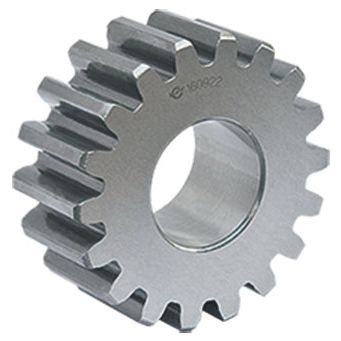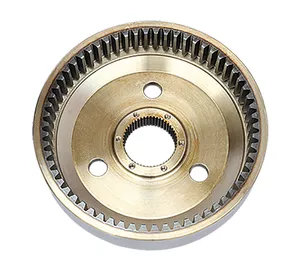
When selecting gears for heavy equipment such as excavators, loaders, and other construction machinery, buyers often focus on tooth count, model compatibility, or price. However, one of the most critical—but frequently overlooked—factors is how the gear is manufactured.
Forged gears and cast gears may look similar on the surface, but their internal structure, performance, and service life can be very different. Understanding these differences helps buyers make smarter decisions, especially when gears are used in high-load environments like final drives and planetary gearboxes.
So let’s break it down in a clear, practical way.
Cast gears are produced by pouring molten metal into a mold, allowing it to cool and solidify into shape. This method has been used for decades and is still common for certain applications.
Lower production cost
Suitable for complex shapes
Faster initial manufacturing
Ideal for low to medium load applications
Because casting allows complex geometries, it is often used where shape flexibility matters more than extreme strength.
However, the cooling process can introduce internal porosity, which affects mechanical strength.
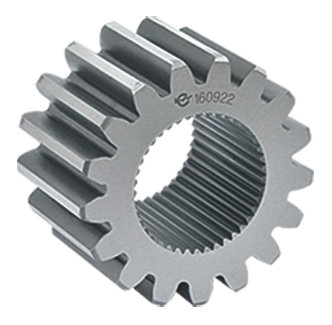
Forged gears are produced by shaping heated metal under high pressure, usually with forging presses ranging from hundreds to thousands of tons. The metal’s grain structure flows along the shape of the gear, creating a dense and continuous internal structure.
Higher strength and toughness
Better resistance to impact and fatigue
Reduced internal defects
Longer service life under heavy load
Forged gears are widely used in excavator final drives, loader planetary gear systems, and mining machinery, where failure is not an option.
Honestly, once you’ve used forged gears in demanding conditions, it’s hard to go back.
This is where forged gears clearly stand out.
Cast gears may crack under repeated shock loads
Forged gears distribute stress more evenly
Forged gears resist tooth breakage better
Cast gears can wear faster in abrasive environments
In heavy equipment, gears are constantly exposed to sudden torque changes. A forged gear handles these changes with greater stability, while cast gears are more vulnerable to fatigue failure over time.
Sometimes cast gears perform well at first, but the problem appear after long-term use.
Service life is not just about hardness—it’s about internal consistency.
Forged gears combined with proper quenching and tempering (QT) treatment achieve:
Hardened tooth surface
Tough internal core
Balanced wear resistance
Reduced risk of sudden failure
Cast gears can also be heat-treated, but the presence of micro-voids limits their long-term reliability under continuous stress.
For heavy equipment owners, downtime costs far more than the gear itself. This is why many professional buyers choose forged gears despite the higher upfront cost.
From a purely price-based view:
Cast gears are cheaper
Forged gears cost more
But from a total ownership cost perspective:
Forged gears last longer
Fewer replacements needed
Reduced risk of secondary damage
Lower downtime
For rental companies, contractors, and distributors, forged gears often deliver better long-term value—even if the initial investment is higher.
Load requirements are moderate
Budget is limited
Equipment operates intermittently
Failure risk is acceptable
Equipment works under heavy load
Long operating hours are expected
Shock and impact are frequent
Reliability and lifespan matter most
For excavators and loaders operating in construction, mining, or quarry environments, forged gears are generally the preferred solution.
Not all forged or cast gears are created equal. A reliable supplier should have:
In-house forging or casting facilities
CNC machining capability
Advanced heat treatment lines
Crack detection and metallographic testing
Stable quality control systems
This is why many global buyers work directly with experienced China manufacturers and China suppliers who specialize in heavy equipment supporting products.
Forged and cast gears each have their place, but for heavy equipment operating under demanding conditions, forged gears offer superior strength, durability, and reliability. Choosing the right manufacturing process is not just a technical decision—it’s a strategic one that impacts performance, maintenance costs, and equipment uptime.