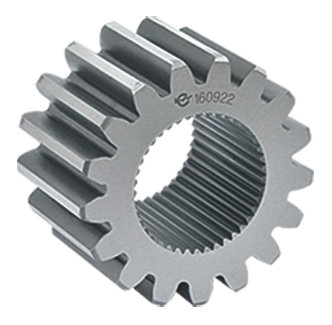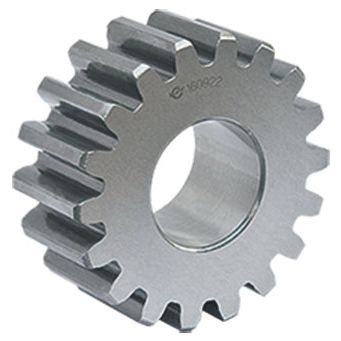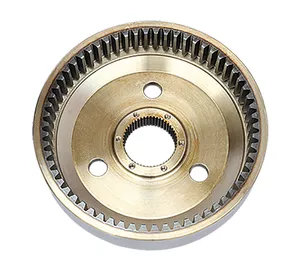
In heavy equipment such as excavators and wheel loaders, gears are not just transmission components—they are load-bearing parts that directly influence machine stability, efficiency, and service life. While many buyers focus on gear size or tooth count, heat treatment technology often plays a more critical role in real-world performance.
In this technical breakdown, we’ll explore how different heat treatment processes affect gear behavior, why quenching and tempering (QT) is widely used, and what professional buyers should really look for when sourcing gears.
A gear’s raw material alone does not determine its strength.
Without proper heat treatment, even high-grade steel can fail prematurely.
Heat treatment controls:
Surface hardness
Core toughness
Fatigue resistance
Impact resistance
Crack propagation behavior
Simply put, heat treatment defines how a gear survives stress over time.
And this is especially critical in excavator final drives and loader planetary gearboxes, where gears face:
High torque
Repeated impact loads
Continuous rotation
Variable working conditions
QT is one of the most widely used processes for loader and excavator gears.
How it works:
The gear is heated to a specific temperature
Rapidly quenched to harden the structure
Then tempered to relieve internal stress
Result:
Hardened outer layer
Tough, shock-absorbing core
This balance allows the gear to resist surface wear while absorbing sudden impact—ideal for applications like 62-tooth gears in loader final drives.
The advantage of QT gears is that they don’t crack easily under heavy load, which is why many professional users prefer them.
Surface hardening targets only the tooth surface.
Key features:
Very high surface hardness
Minimal core transformation
Short processing time
This process is commonly used for:
Medium-load gears
High-speed rotating components
Applications where wear resistance is prioritized over impact resistance
However, if the hardened layer is too thin or uneven, the gear may experience premature tooth failure.
Carburizing introduces carbon into the gear surface before quenching.
Advantages:
Extremely hard surface
Excellent wear resistance
Suitable for long-term continuous operation
Limitations:
Higher cost
Longer production cycle
Requires precise control
This process is often used for high-end gear applications, but it must be done by experienced manufacturers. Otherwise, distortion or uneven hardness may occur.
Let’s translate process differences into real-world outcomes.
| Performance Factor | Poor Heat Treatment | Proper Heat Treatment |
|---|---|---|
| Tooth wear | Rapid | Controlled & slow |
| Impact resistance | Low | High |
| Noise & vibration | Inconsistent | Smooth operation |
| Fatigue life | Short | Long |
| Crack resistance | Weak | Strong |
In practice, gears with improper heat treatment may look fine initially but fail suddenly—often damaging surrounding components such as bearings, shafts, and housings.
This kind of failure is costly and avoidable.
Professional ToB buyers increasingly prefer suppliers with in-house forging, machining, and heat treatment.
Why?
Better process consistency
Stable hardness distribution
Lower defect rates
Traceable quality control
A gear produced through an integrated production model is less likely to suffer from hidden internal defects. And honestly, that peace of mind is worth it.
Sometimes buyers focus only on price, but later realize the gear wasn’t heat-treated properly and the machine stopped working again after a few months—it happens more often than people think.
If you are sourcing from a China manufacturer or China supplier, here are practical questions to ask:
What heat treatment process is used for this gear?
Is hardness testing performed on each batch?
Can you provide metallographic inspection data?
Is the process suitable for my machine’s working load?
Are similar gears already used by other customers?
These questions help separate experienced suppliers from trading-only companies.
Heat treatment is the hidden factor that decides whether a gear lasts months—or years.
Understanding QT, surface hardening, and carburizing allows buyers to make smarter decisions, reduce downtime, and improve machine reliability. For excavator and loader applications, choosing a supplier with proven heat treatment capability is just as important as choosing the right model.